Aluminum composite material gives you a lightweight, stiff panel made from two thin aluminum sheets bonded to a core, and it solves common trade-offs between weight, durability, and finish for cladding, signage, and transport uses. You get high weather resistance, consistent flatness, and a wide range of finishes that let you achieve durable exterior surfaces or sleek interiors without heavy structural steel.
This article breaks down how ACM achieves that strength-to-weight balance, what core and facing choices mean for performance, and where the material excels versus alternatives. Expect clear guidance on selection, fabrication considerations, and typical applications so you can decide whether ACM fits your next project.
Fundamentals of Aluminum Composite Material
Aluminum composite material combines thin aluminum faces with a lightweight core to deliver stiffness, flatness, and visual finish while keeping weight low. You’ll find specific options for fire performance, bending, and aesthetic treatments that affect where and how you can use it.
What Is Aluminum Composite Material
Aluminum composite material (ACM) consists of two cold-rolled aluminum sheets bonded to a continuous core. The typical face thickness ranges from 0.2 mm to 0.6 mm per sheet, while cores vary from polyethylene (PE) to mineral or fire-resistant cores.
You’ll commonly see ACM as flat panels used for building façades, signage, cladding, and interior applications. Fabricators choose ACM because it produces large, dimensionally stable panels that accept paint finishes, perforation, and routed details without heavy weight.
Key Properties and Characteristics
ACM delivers a high stiffness-to-weight ratio and excellent flatness compared with single-sheet panels of similar rigidity. The bonded sandwich structure increases bending resistance while keeping overall mass low.
Important properties you should check: thermal expansion coefficient, surface finish durability (PVDF or polyester coatings), fire classification (combustible vs. non-combustible cores), and weathering resistance. Expect good corrosion resistance from the aluminum skins, but inspect edge treatment and core exposure to avoid moisture traps.
Manufacturing Process
Manufacturing begins with surface treatment and coil coating of aluminum sheets to apply primer and color finishes. Two pre-treated aluminum faces are then bonded to the core using continuous or batch lamination under heat and pressure.
Quality control steps include peel strength testing, flatness inspection, and coating adhesion tests. Final processing often involves CNC routing, folding, and forming. Fabricators may add fire-retardant cores or perforations depending on performance requirements.
Types of Aluminum Composite Material
Common ACM types include:
- PE-core ACM: lightweight and economical, typically used where fire risk is low.
- Fire-resistant (FR) or mineral-core ACM: contains mineral or modified cores to meet fire codes.
- Honeycomb core panels: use aluminum or other honeycomb structures for very high stiffness-to-weight ratios.
- Solid aluminum-faced sandwich with non-combustible cores for critical façades.
Select a type based on code requirements, desired panel thickness (commonly 3–6 mm overall), and fabrication needs like bending radius or perforation.
Applications and Benefits
Aluminum composite material combines a lightweight sandwich structure with strong weather and fire resistance, making it suitable for exterior cladding, interior finishes, and high-visibility displays. You get durable panels that simplify installation, reduce maintenance, and allow precise visual design.
Construction and Architecture
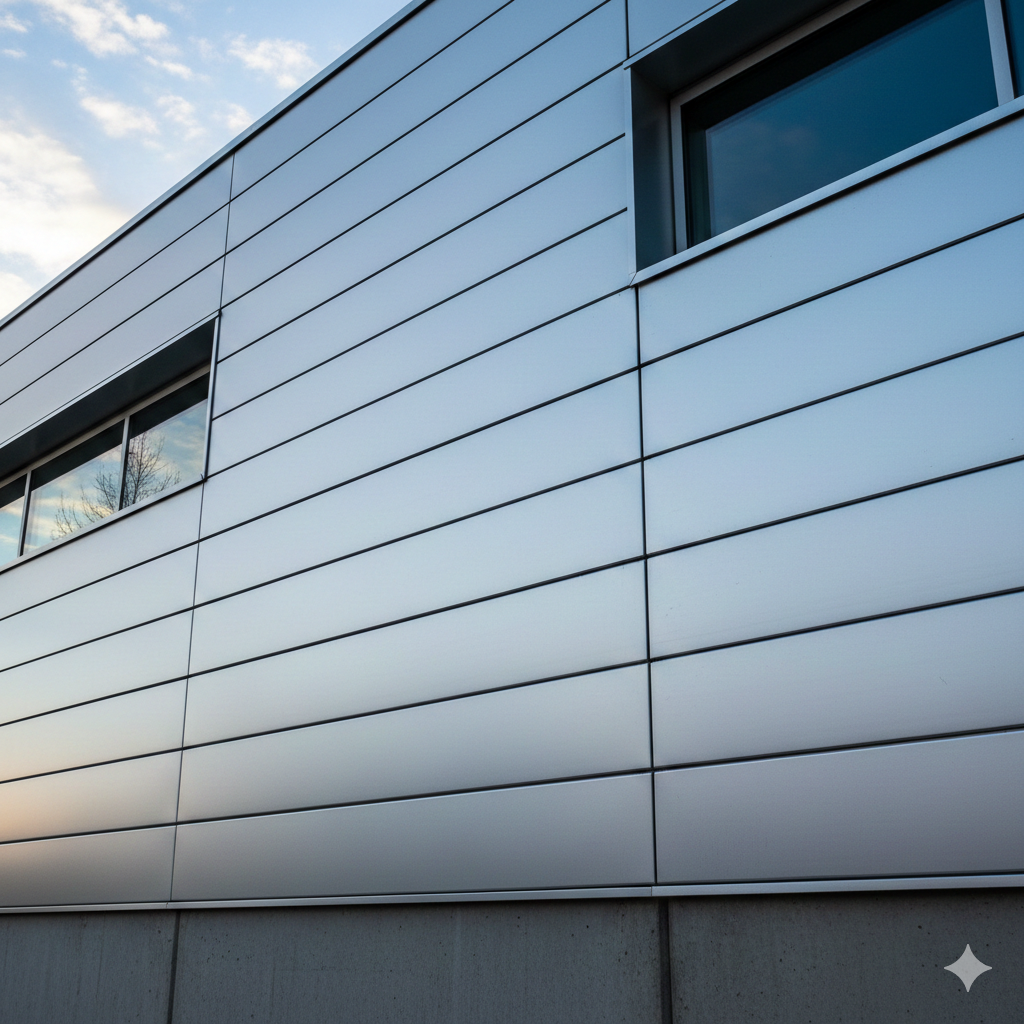
You can use ACM for ventilated façades, curtain walls, soffits, and building rehabilitation. Its two thin aluminium skins bonded to a core give high stiffness at low weight, so panels span larger distances with fewer support members.
Choose fire-rated cores and properly detailed joints to meet local codes; many systems achieve non-combustible or limited-combustibility ratings when specified correctly. Installation methods include through-fix, rivet, and concealed clip systems, letting you prioritize speed or thermal performance.
ACM also accepts a wide range of finishes — PVDF paint, anodizing, or custom prints — so you can match color standards, create large-format graphics, or use textured surfaces for reduced glare.
Signage and Display Uses
You can fabricate signs, storefront displays, point-of-purchase systems, and exhibition panels from ACM. Its flatness and consistent surface let you apply vinyl, screen print, or direct digital prints with high resolution and color fidelity.
Panels cut cleanly with CNC routers or waterjets, enabling intricate shapes and routed lettering. For outdoor signage, pick UV-stable coatings and edge-sealed joints to limit moisture ingress and fading.
ACM’s lightweight nature reduces attachment hardware and shipping costs, and its rigidity prevents sagging on large-format signs, keeping graphics taut and legible over time.
Benefits Over Traditional Materials
ACM outperforms single-sheet metals and many plastics in weight-to-stiffness ratio; you move, mount, and support larger panels with less structure. Its composite core improves thermal performance compared with solid metal, and insulated variants help reduce thermal bridging.
Durability and weather resistance cut long-term maintenance: painted finishes resist chalking and corrosion, while cleaning is typically just mild detergent and water. You also gain fabrication efficiency — faster cutting, bending, and joining — which shortens lead times and lowers labor costs compared with masonry, heavy metal, or full-metal cladding.
Finally, recyclability and availability of low-density cores give you options to meet sustainability targets without sacrificing performance.