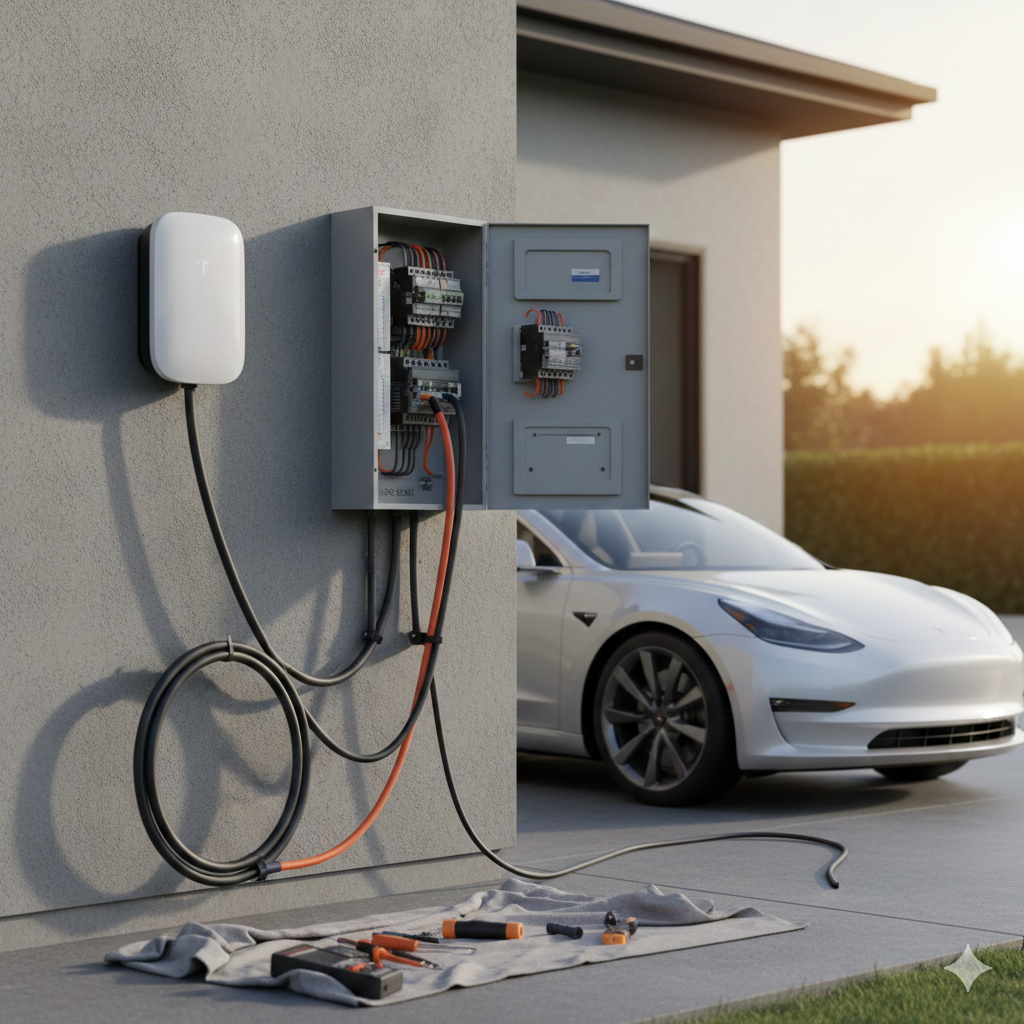
Looking for “electrical panel installation near me” means you want a safe, code-compliant upgrade fast and with minimal disruption. You can find licensed electricians nearby who assess your current electrical panel, recommend the right capacity, and install a new breaker box that meets local codes and modern power demands.
This post guides you through what those pros do, typical costs you can expect, and the safety and permit steps that matter most so you can make an informed decision. Keep reading to learn how to spot qualified installers, what questions to ask, and what to expect during the installation process.
Electrical Panel Installation Services
You’ll learn how to find licensed electricians, which panel types suit different homes, and the typical step-by-step process installers follow. The focus is on practical decisions: safety, code compliance, capacity, and cost factors.
Finding Licensed Electricians Near You
Look for electricians who are licensed in your state or province and carry general liability and workers’ compensation insurance. Check the license number against your local building authority’s online database to confirm status and disciplinary history.
Ask for references from recent panel installs and verify they perform inspections and pull permits. Get written quotes from at least three contractors that list labor, materials (panel brand/model), permit fees, and estimated timeline. Prefer electricians who include circuit labeling, a main-bonding jumper, and AFCI/GFCI breakers where code requires them.
Read recent online reviews for workmanship and punctuality, not just price. Confirm the electrician offers a written warranty on labor and will provide the final permit/inspection paperwork you’ll need when selling the home.
Types of Electrical Panels
Main panels come in several common configurations: 100 amp, 150 amp, 200 amp, and larger service upgrades for high-demand homes. Choose capacity based on total calculated load — HVAC, electric range, EV charger, and panel-rated service size.
Panels differ by breaker type: standard thermal-magnetic breakers, combination arc-fault/ground-fault (AFCI/GFCI), and tandem/skinny breakers for space-saving. Some homes need a split-bus or subpanel for garage/ancillary loads; others require a meter-main where the meter and main breaker share an enclosure.
Materials and brands vary; prefer panels and breakers listed by a nationally recognized testing lab (e.g., UL). If your home has aluminum wiring or a legacy fuse box, plan for additional corrective work or a full replacement rather than a simple retrofit.
Steps in the Installation Process
A typical install begins with a site visit and load calculation, followed by permit application. The electrician will schedule power shutdown, remove the old panel, and install the new enclosure, main breaker, and bus bars.
Next, the electrician transfers existing branch circuits into the new breakers, labels each circuit, and installs required ground and neutral connections. They verify panel bonding and install AFCI/GFCI breakers where code or usage demands them.
After wiring, the inspector performs a final inspection; once approved, the electrician re-energizes the service and hands you documentation: permit, inspection report, and a labeled circuit directory. Expect cleanup, testing of major circuits, and guidance on breaker operation and maintenance.
Costs, Safety, and Local Regulations
You’ll need to budget for equipment, labour, permits, and inspection fees. Followed correctly, permitting and safety steps protect your home and keep insurance valid.
Average Costs for Electrical Panel Installation
Expect typical installed costs in Canada to range by amperage and complexity. A standard 100A panel usually runs about $1,200–$2,500 CAD installed. A 200A upgrade commonly costs $2,500–$4,500 CAD.
Additional costs to plan for:
- Labour: licensed electrician hourly rates vary by region; allowance of 4–8 hours for a straight swap.
- Materials: breakers, new meter base or service mast, grounding equipment.
- Extras: new conductor from utility, subpanel work, or significant rewiring adds $500–$2,000+.
Obtain at least three quotes. Ask each electrician for a written breakdown (panel brand/model, labour hours, parts, permit fees) so you can compare apples to apples.
Permit and Code Compliance
You must obtain a permit and final inspection from your local authority before energizing a new panel. Codes differ by province/municipality; Ontario requires ESA notification and an inspection, while other provinces use municipal electrical inspectors.
When you hire a licensed electrician, verify they include permit application and inspection in their quote. Request the exact code references or permit numbers for the planned work. Keep copies of permits, inspection reports, and receipts—insurers and future buyers often request them.
Safety Guidelines and Tips
Only a licensed electrician should disconnect service, work inside the meter base, or modify the service conductor. Working without disconnecting the main or without proper PPE risks electrocution.
Before work starts, confirm the electrician will: secure a utility shutoff if required, follow CSA and local code grounding and bonding rules, and perform load calculations to size the panel correctly.
After installation, test GFCIs, AFCIs, and main overcurrent protection. Keep the panel accessible—clear 90 cm (approx. 36 in.) working space—and label all circuits legibly.