You can cut costs, meet regulations, and shrink your facility’s environmental footprint by treating commercial recycling as an operational priority rather than an afterthought. Set up clear waste streams, right-size collection containers, and work with a hauler that matches your pickup schedule and material types to get measurable results quickly.
This article Commercial Recycling will walk you through how to identify what your business actually throws away, how to separate and collect materials efficiently, and how to route them into the right processing streams so you stop paying for mistakes. Expect practical steps you can apply to offices, retail outlets, restaurants, or industrial sites to make recycling simpler and more productive.
Understanding Waste Streams
In Commercial Recycle You will learn which materials commonly enter commercial recycling systems and how to audit and sort them to cut costs, reduce contamination, and meet local regulations.
Types of Recyclable Materials
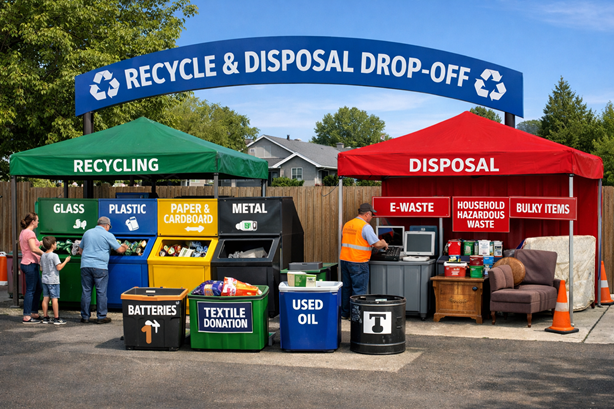
Identify material categories by how they’re collected and processed. Put fibers (mixed office paper, corrugated cardboard, magazines) in a dry, clean stream; keep cardboard flattened to save space. Place rigid plastics (HDPE #2, PET #1) in a separate container from soft films; note that plastic film often requires drop-off at retailer take-back points. Collect metals (aluminum cans, steel tins) loose or bagged but free of food residue to avoid processing rejects. Keep glass separated by color only if your hauler requires it; otherwise, one-stream glass is acceptable where accepted. For organic/food waste, use dedicated bins and either compost on-site or route to anaerobic digestion; avoid liquids and oils in organics containers. Hazardous and electronic wastes (batteries, lamps, e-waste) must follow specific regulatory channels and never enter your regular recycling bins.
Waste Auditing and Categorization
Start with a baseline audit: pick representative days, sample dumpsters, and weigh each category to establish volume and cost drivers. Use a simple log sheet or spreadsheet columns for category, weight, contamination rate, and disposal cost per ton. Conduct visual sorting first, then perform spot-checks for contamination (e.g., food in paper bins, plastic bags in rigid plastics). Set clear labeling and bin color codes based on audit results to reduce cross-contamination. Track metrics monthly—tons diverted, contamination percentage, and hauling cost—to measure improvements. Train staff using photos of acceptable vs. unacceptable items and short, repeatable procedures for handling ambiguous waste.
Optimizing Collection and Processing
You will reduce costs and contamination by redesigning routes, container systems, and processing lines around the materials you generate and the markets you serve. Targeted investments in sorting equipment and selective partnerships unlock steady revenue from secondary materials.
Implementing Efficient Sorting Systems
Start by mapping the exact stream composition: weight share, contamination rates, and peak volumes for paper, cardboard, PET, HDPE, glass, and organics. Use that data to pick equipment that matches throughput needs—conveyor belts and trommels for volume, optical sorters for clear/colored plastics, and eddy currents for nonferrous metals.
Design the floorplan to minimize manual handling: short conveyor runs, ergonomic feed stations, and designated reject areas. Implement clear signage and color-coded bins to cut contamination at the source. Train staff on common contaminants and quick identification protocols; hold weekly audits with sample pulls to measure improvements.
Track KPIs such as recovery rate (% material sold vs. delivered), contamination rate, processing cost per ton, and equipment uptime. Schedule preventive maintenance and remote performance monitoring for critical machines to avoid costly downtime. Small layout or equipment changes informed by KPI trends typically yield the fastest ROI.
Partnering With Service Providers
Choose haulers and MRFs (material recovery facilities) based on documented performance, not just price. Ask for monthly tonnage reports, contamination metrics, and end-market destinations for each commodity. Negotiate contracts that tie pricing to quality (e.g., lower fees for <5% contamination) and include clear rejection and remediation procedures.
Consider single-provider relationships that handle collection, transport, and processing to simplify billing and accountability. Alternatively, split services—local haulers for collection and a regional MRF for specialized sorting—if your stream needs advanced processing. Request site visits and require proof of certifications, permits, and buyer letters for high-value materials.
Build contingency clauses for market volatility (price floors, temporary suspensions) and include clauses for regular service reviews every 6–12 months. Maintain a short vendor scorecard to track on-time pickups, contamination incidents, and payment accuracy to inform renewal decisions.